
 Image 1 of 1
1-Day Team Briefing | Foundational principles of Explosive Atmospheres
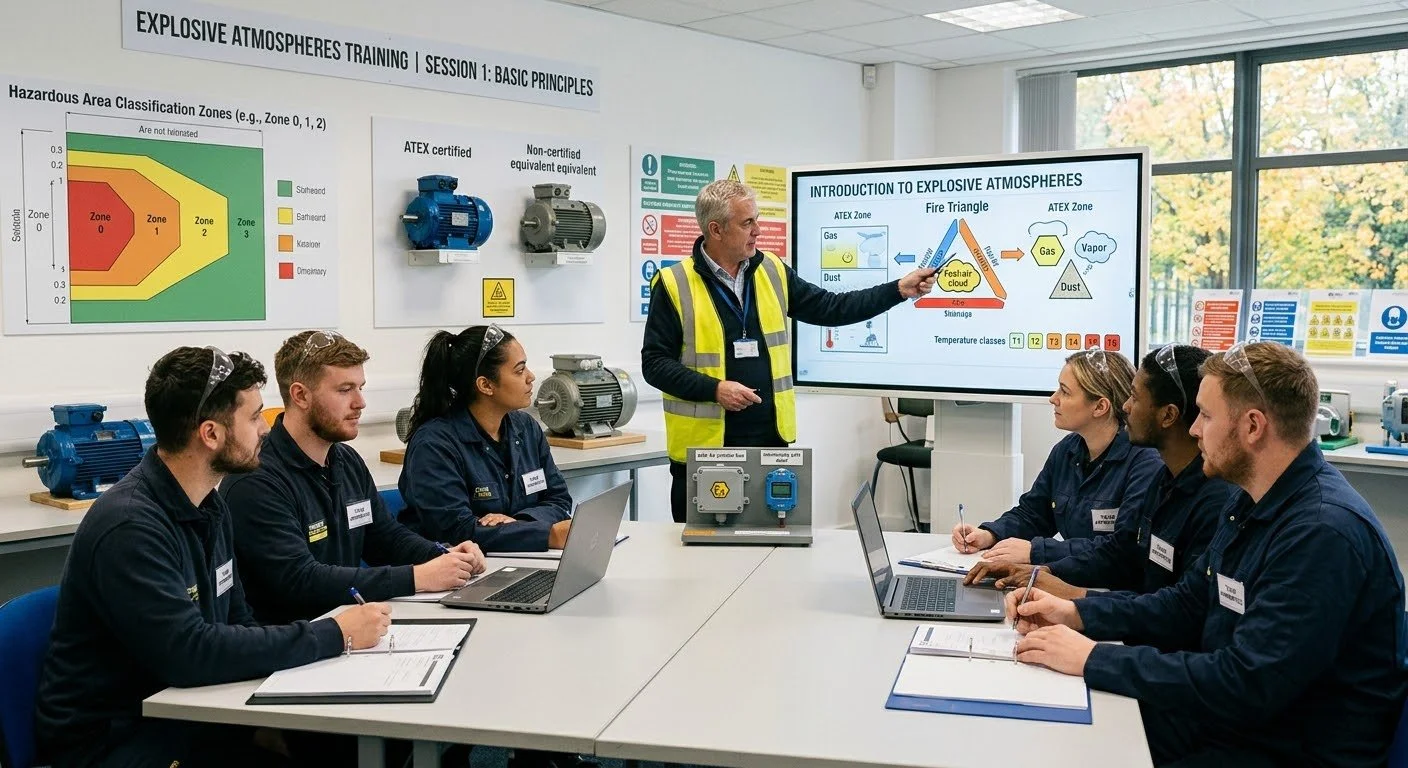
Maintaining a universal understanding of safety and compliance limits operational risk across your entire organization. This intensive, one-day group briefing delivers a clear, accessible introduction to hazardous area fundamentals, ensuring your personnel understand the essential mechanics, classifications, and safety methodologies governing explosive atmospheres.
What This Training Involves:
The Fundamentals of ATEX: Understanding what the directive is, why it is mandated, and its critical role in workplace safety.
Demystifying Area Classification: A practical guide to what the specific zones mean and how they dictate equipment selection.
Gas vs. Dust Environments: Differentiating the distinct physical behaviors, hazards, and classification variations between gas and combustible dust hazards.
Equipment Compatibility: Identifying exactly what types of equipment can be safely deployed within classified hazardous zones.
Overview of Protection Methods: An introductory look at the engineering methods used to prevent equipment from becoming an ignition source.
Global Routes to Certification: Mapping out the standard regulatory steps and administrative compliance pathways required to bring products to market.
Analyzing Common Market Issues: Reviewing real-world pitfalls, installation mistakes, and compliance errors to protect your operations.